Who goes home after aneurysm surgery
Using national surgical quality data, we identified which patients are discharged somewhere other than home after surgery for unruptured and ruptured intracranial aneurysms.
Read the paper →
 MD candidate, expected 2029Warren Alpert Medical School of Brown University
 Research Fellow, Neurosurgery, 2026–Brigham and Women’s HospitalScB Biochemistry & Molecular Biology; AB English, 2023Brown University
Hi, I’m Chris. Thanks for stopping by!
I’m a medical student at Brown University, spending this year as a research fellow in neurosurgery at Brigham and Women’s Hospital. My interests sit where neurosurgery meets public health: cerebrovascular disease, brain tumors, trauma, injury prevention, and health policy. My work spans clinical outcomes research and population-level studies of how policy shapes health. I grew up in Taipei and studied biochemistry and English at Brown.
Using national surgical quality data, we identified which patients are discharged somewhere other than home after surgery for unruptured and ruptured intracranial aneurysms.
Read the paper →We built and externally validated machine learning models that predict how these aneurysms are treated and how patients do afterward.
Read the paper →In a large single-center cohort, we compared transradial and transfemoral access for mechanical thrombectomy in acute ischemic stroke.
Read the paper →How intraoperative electrocorticography and brain mapping guide resection of cerebral cavernous malformations that cause seizures.
In pressA high-grade subarachnoid hemorrhage with a negative angiogram turned out to come from a ruptured anterior spinal artery aneurysm and cervicomedullary AVM, found on day 10 and removed through a far-lateral approach without deficits.
Read the paper →A review of the molecular drivers of glioblastoma recurrence, the role of repeat surgery, and treatments now emerging, from CAR T cells and oncolytic viruses to laser interstitial thermal therapy.
Read the paper →We tracked federal funding, clinical trials and publications in firearm injury prevention from 1985 to 2022. A 2026 follow-up in Injury Epidemiology compared public health and criminal justice funders.
Read the paper →Using the National Violent Death Reporting System, 2015 to 2021, we examined racial disparities in unintentional firearm deaths among children aged 0 to 17.
Read the paper →A national survey of US medical schools. Of 55 that responded, 64% teach firearm injury prevention, but only 27% formally assess it. Limited curricular time was the most common barrier.
Read the paper →


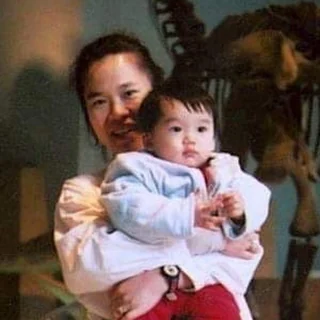
With my mom, where it all started.
I shoot landscapes, portraits, streets and the occasional animal. See the gallery.
I studied English alongside biochemistry, and I still write: “Together” in JAMA, and “What it means to be Taiwanese” in The Brown Daily Herald.
Bilingual in Mandarin and English, with some German. I lead a Medical Mandarin elective for preclinical students.
Available for portraits, events and collaborations. Get in touch.
Email is best. I’m glad to hear about research collaborations, photography opportunities, or anything in between.